
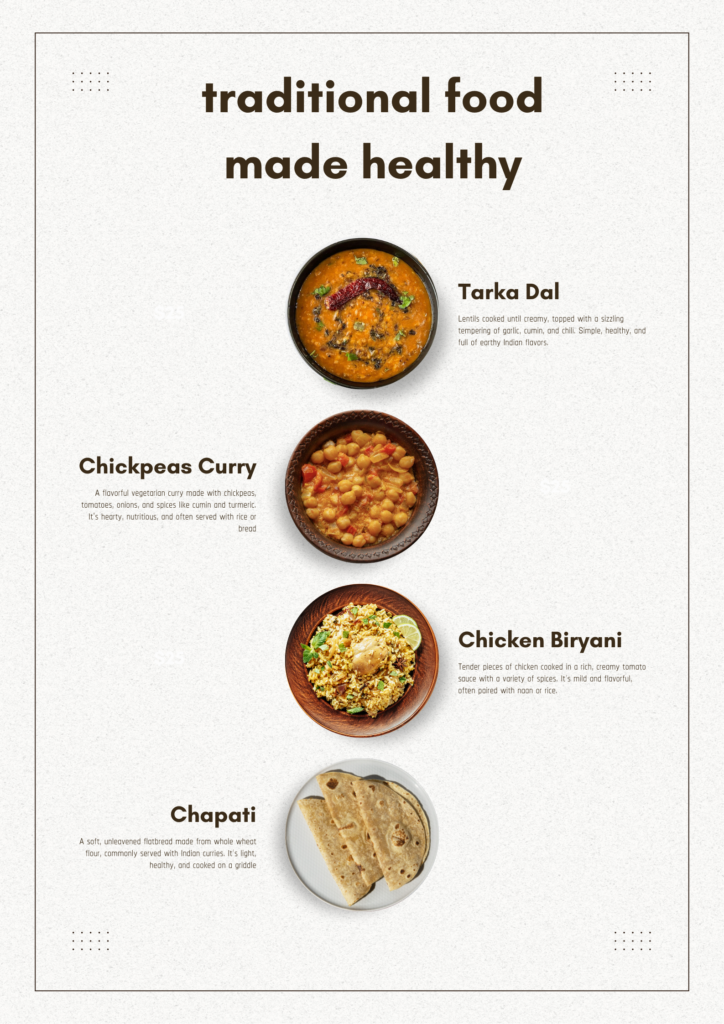
Healthy food doesn’t mean abandoning culture.
By making small, thoughtful swaps, you can enjoy comfort foods that heal, not harm, while managing blood sugar and building sustainable habits.
DISH 1: BIRYANI
Why This Matters: Traditional Biryani is often carb-heavy and calorie-dense. Redesigning it allows you to enjoy your favorite dish while improving nutrition, managing glucose levels, and building sustainable eating habits.
How We Redesigned It:
| Component | Original | Healthy Swap | Why It Works |
|---|---|---|---|
| Base | White basmati rice | ½ cup brown basmati rice + ½ cup cauliflower rice | Reduces glycemic load, slows sugar absorption |
| Oil/Ghee | 3-4 tbsp | 1 tsp olive oil or coconut oil | Lower fat, same flavor |
| Protein | Chicken/mutton | Skinless chicken, tofu, or legumes | Lean protein stabilizes blood sugar |
| Veggies | Minimal | Add carrots, peas, beans, spinach | Fiber & micronutrients |
| Flavor | Heavy cream | Low-fat yogurt + spices (turmeric, garam masala, cumin) | Preserves taste, reduces fat |
Step-by-Step Instructions:
- Prep ingredients: Chop vegetables, cook protein, measure rice/cauliflower mix.
- Cook base: Lightly sauté brown rice + cauliflower rice in 1 tsp oil.
- Cook protein: Marinate chicken/tofu in yogurt + spices, then cook.
- Mix vegetables: Sauté until tender-crisp.
- Layer & flavor: Combine rice, protein, vegetables; add herbs/spices. Cover and simmer 5–10 min.
- Serve immediately or portion for meal prep.
Why It Works: Fiber from cauliflower & vegetables slows sugar absorption. Lean protein stabilizes energy. Healthy fats improve satiety. Flavor remains rich and aromatic, making the dish enjoyable and sustainable.
Serving & Meal Prep Tips: Makes 3–4 servings. Pre-portion into containers. Pair with cucumber raita or fresh salad for extra fiber. Optionally, adjust spice levels for taste preferences.
DISH 2 : CHICKEN KARAHI
Why This Matters: Traditional Chicken Karahi often uses excess oil, cream, or ghee, which can spike blood sugar and calories. A redesigned recipe allows you to enjoy this dish while improving nutrition, stabilizing glucose, and building sustainable eating habits.
How We Redesigned It:
| Component | Original | Healthy Swap | Why It Works |
|---|---|---|---|
| Protein | Chicken with skin | Skinless chicken breast or thigh | Lean protein stabilizes blood sugar |
| Oil/Ghee | 3–4 tbsp | 1 tsp olive oil or avocado oil | Reduces saturated fat while keeping flavor |
| Vegetables | Minimal | Add bell peppers, tomatoes, onions | Increases fiber & micronutrients |
| Cream/Butter | Optional | Low-fat yogurt or omit | Lowers calories & saturated fat |
| Spices | Same | Fresh garlic, ginger, cumin, coriander, chili, turmeric | Retains traditional aroma & taste |
Step-by-Step Instructions:
- Prep ingredients: Chop vegetables, measure spices, cut chicken.
- Cook protein: Sauté skinless chicken in 1 tsp oil until lightly browned.
- Cook vegetables: Add onions, bell peppers, tomatoes; cook until tender.
- Combine & flavor: Add garlic, ginger, turmeric, cumin, coriander, chili. Mix chicken in.
- Optional: Add 1–2 tbsp low-fat yogurt for creaminess. Simmer 5–10 minutes.
- Serve: Garnish with fresh cilantro. Serve immediately or portion for meal prep.
Why It Works: Fiber from vegetables slows digestion. Lean protein stabilizes energy and glucose. Minimal healthy fats improve satiety. Traditional flavors are preserved, encouraging sustainable healthy eating.
Serving & Meal Prep Tips: Makes 3–4 servings. Pre-portion into containers for lunches or dinners. Pair with brown rice, cauliflower rice, or whole-grain roti for balanced meals.